
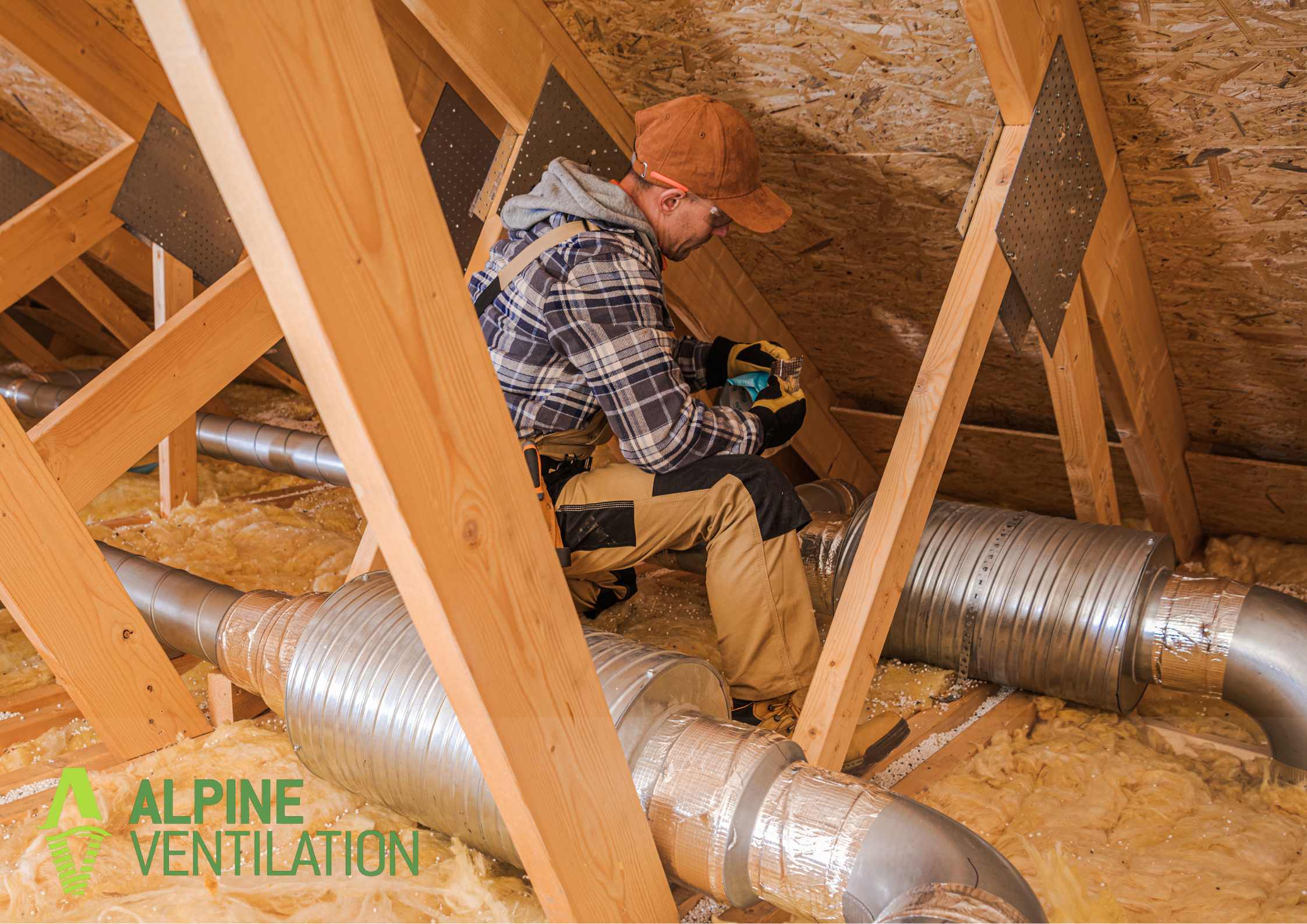
When selecting a ducted roof vent for your house to vent your exhaust fan or rangehood, there are many different options. Thankfully they fall in several different categories to make comparison easier. Once you determine the type of roof vent you want, it is easier to compare and determine the one that best suits your needs. The 4 types are buying separate components, traditional roof vent kits, compact roof vents with pipe and cowl provided together – and more contemporary lower profile vents.
There are a number of factors to consider – ease of installation, aesthetics, type of roof you have, cost and BAL compliance if you live in a bushfire area.
You can purchase the basic components separately – cowl, pipe, flashing (for tiled or metal roofs) – plus ducting, clamps, tape, bracing strap etc. This gives the benefit of getting the items you need and not the ones you don’t – and also ensuring the correct diameter. If you are experienced, this may be a good alternative. One of the downsides of this type of roof vent is that it is necessary to brace the vertical steel pipe to the roof structure – and also these vents (though very popular for many years) can be visually prominent, Some cowls (usually the mushroom cowl shape) have mesh to keep insects out as well as providing BAL compliance. Whilst generally supplied in standard aluminium or galvanised steel finishes, these can be painted or powder coated to match a roof colour.
Often buying these products in a kit can be easier and can even be a lower cost method. Kits are generally 125, 150 or 200mm in diameter. Some combine 125 and 150mm in one kit and include an adapter to reduce the diameter back to 125mm for these applications. Most rangehoods generally require 125 or 150mm diameter ducting – though some larger ones are appearing with 200mm requirements. There are several brands aside from Alpine, including Pacific Air, Abey and Deflecto. Different kits include different components. Most use semi rigid ducting, which – though harder to install than flexible ducting – is a more efficient and quieter form of ventilation. Most include flashing for a metal or tiled roof – and others are supplied without flashing – which then needs to be purchased separately. Kits are often a lower cost method overall than purchasing the components separately.
A newer alternative is the compact type roof vent that includes a shorter length of pipe and the cowl. Flashing is sometimes included and sometimes added later. The benefit of this type of vent is that the installation is usually a little faster. The pipe does not require bracing. Unlike traditional roof vents with a longer pipe which are positioned fully upright, this vent sits on the angle of the roof (often 15 or 22 degrees on newer homes) as it is secured to a tile or metal roof panel. Aside from the Alpine Compact Roof Vent which is metal in construction, there are similar models manufactured by Omega and Bradford which have also been popular. Often constructed from plastic, there are often colour options for this type of vent.
Our preferred alternative is a low profile roof vent. Our patented model can be installed on metal or tiled roofs, suits diameters of 125, 150 or 200mm, can be hidden under a solar panel, is BAL-40 compliant with insect mesh – and is available in 9 Colorbond colours plus a paintable version. This is easy to install as there is no pipe to brace. It has a large aluminium flashing base – and installs similarly to a rotary vent. Many builders are using this vent – and using the 200mm neck adapter, several fans can be exhausted by just one vent – reducing cost and the number of roof penetrations. There are other product around such as the Dragon Vent which may be worth of consideration.
Whatever roof vent you choose to select, the most important thing is that it is effective. If you have any queries about roof vent selection, please feel free to get in touch.