
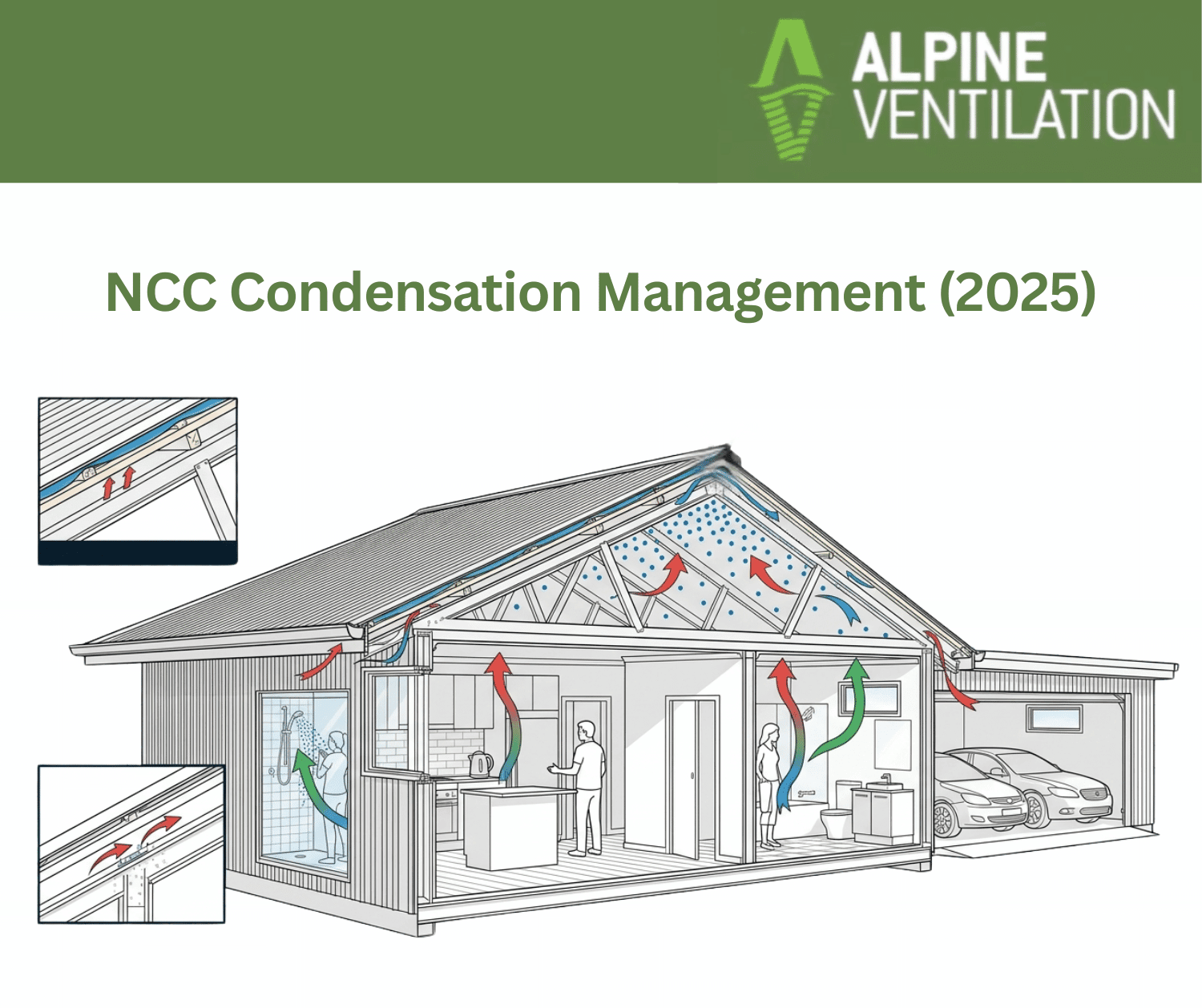
 The NCC 2025 Condensation Management regulations have been finalised. These regulations are in both Volume One (Part F8) and the Housing Provisions (Part 10.8). The 2025 update essentially strengthens, further explains and simplifies the 2022 regulations. These regulations impact both on ventilation and insulation requirements for a building’s roof and walls.
The new regulations are significantly longer. This reflects both increase in detail of the provisions as well as further explanation of the provisions and their interpretation.
What are the changes?
- the inclusion of climate zones 1 and 3 (for the first time), to address the different condensation risks in warmer and mixed climates
- expanded wall ventilation and wall membrane vapour permeance requirements that differ by climate zone and wall construction
- mandatory inclusion of wall cavities in climate zones 6, 7 and 8 – and minimum cavity width requirements
- new exemptions from cavity requirements for insulated sandwich panels and walls below ground level
- revised roof ventilation provisions based on whether insulation is parallel, or not parallel, to the roof plane as opposed to simply pitch and whether a building has a cathedral ceiling
- simplified low‑level and high‑level ventilation area calculation requirements, depending on roof pitch and insulation configuration
- additional explanatory information to assist in the clarification of horizontal roof dimension for calculating total required roof ventilation area.
What hasn’t changed?
The essence of the 2022 regulations remain including such requirements as requiring exhaust fans and vented style clothes dryers to be externally vented, flow rates on fans, requirements for run-on timers on exhaust fans and a basic requirement for ventilating the roof cavity in climate zones 6, 7 and 8 remain intact.
What does this mean?
The changes recognise bigger differences in condensation management between different climate zones, a need for greater focus in wall ventilation, greater explanation of the regulations – and earlier planning by architects.
What are the timing implications?
These differ by state and are potentially likely to change based on previous experience. Indication at present are:
Victoria – 1st May 2026
South Australia – 1st May 2027
NSW – 1st May 2027
Queensland – 1st May 2027
ACT – 1st November 2026
Tasmania – tbc
Where can I see the revised regulations?
Click on this link for the online version
Where can I get further information?
We will be providing further updates. The NCC will also be conducting a series of webinars. See www.ncc.abcb.gov.au for further details. For deep dive into NCC Condensation Management 10.8.2 and 10.8.3, visit Alpine Ventilations guide on Condensation Management.