
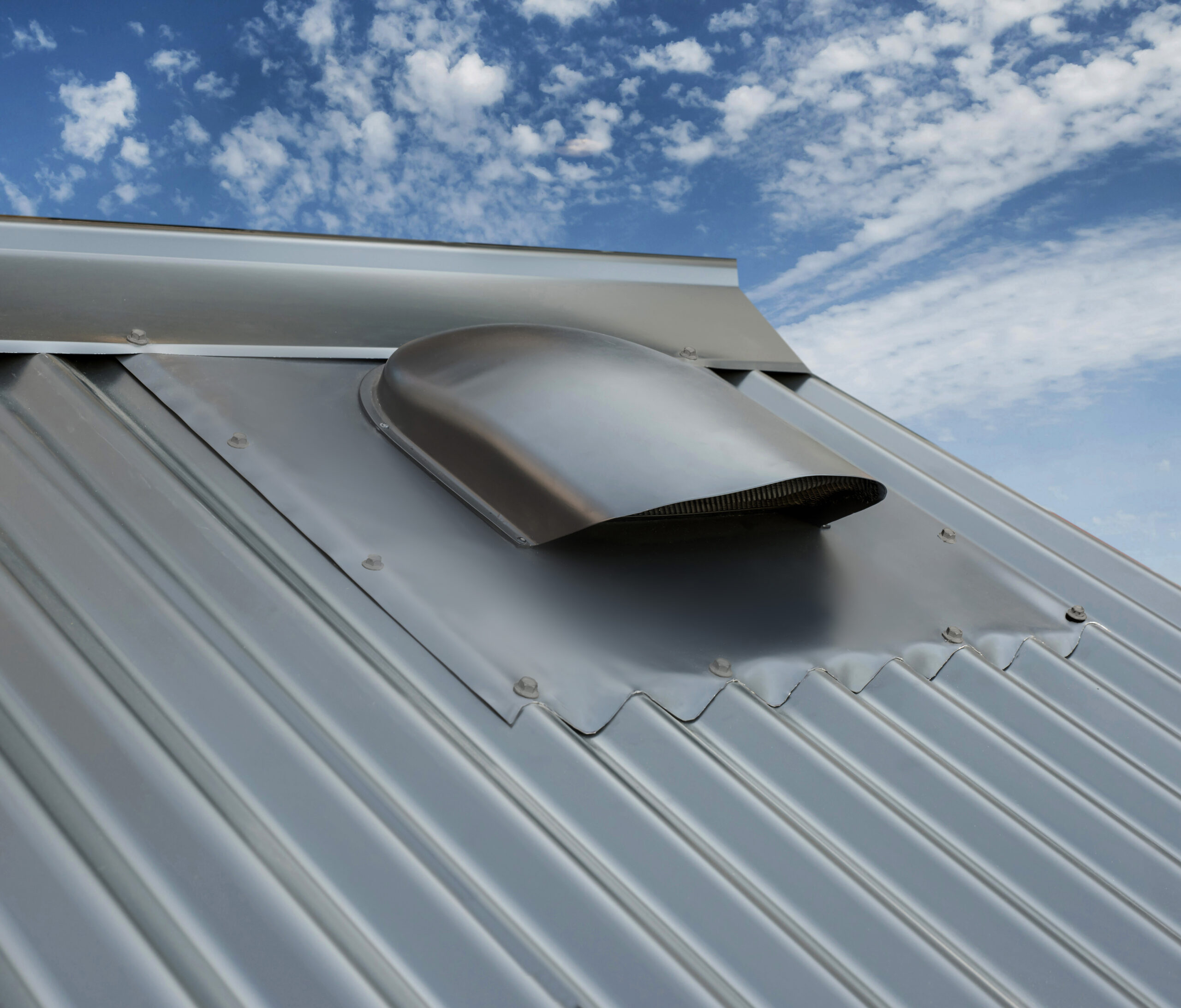
Low profile roof vent on mental roof with blue sky and clouds in background
When it comes to roof ventilation, there are now several options to the traditional rotary (“whirlybird” type ) vent. One of these is the Low Profile Roof Vent by Alpine Ventilation which offers several advantages over the traditional rotary vent
These advantages include – The Low Profile Roof Vent can be installed as either ducted or non-ducted, giving architects and builders flexibility to comply with a with 10.8.2 and 10.8.3 of the NCC condensation management regulations rather than just 10.8.3 which the rotary vents offer.
With no moving parts the Low Profile Roof Vent eliminates the risk of wear, noise or component failure that can eventually develop overtime with rotary vents. The result is consistent airflow without the noise or vibration from spinning components.
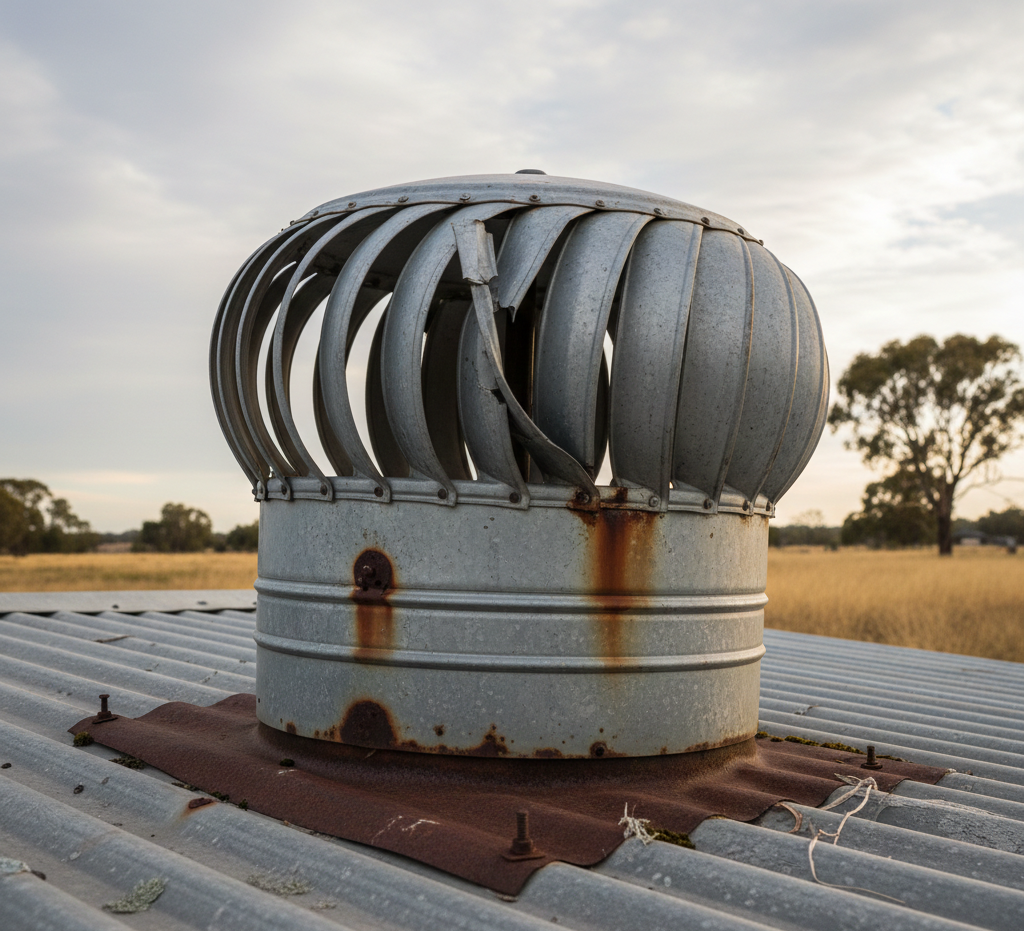
Regarding performance, there is little independent data to suggest that a rotary vent will be more effective than a static vent such as this one.
A sleek unobtrusive design is another clear advantage. The low-profile shape makes the vent far less visible than a rotary unit, creating a cleaner roofline that blends seamlessly with any roof design. The Low Profile Roof Vent can even be installed under solar panels, allowing homeowners to maximise usage of their roof space while complying with ventilation requirements.
Another important design aspect is the Low Profile Roof Vent is built to a BAL-40 bushfire rating as standard so there is no additional cost.
Installation is simple and straightforward, with both ducted and non-ducted options – and has an aluminium base that installs similarly to rotary vents – and can be used for both metal and tiled roofs. It is available in 9 Colorbond colours plus a paintable version.